
Mastering the Market: Essential Reading for Aspiring Investors
The world of investing can seem like a dense forest, impenetrable without a seasoned guide. However, the most profound wisdom often lies within the pages of a book, offering structured, expert-led education at your own pace.
Understanding how to allocate your money strategically is a cornerstone of financial independence. For many, the initial hurdle is simply knowing where to begin. Financial advisors, online courses, and seminars all have their place, but books provide a unique opportunity: unfiltered access to decades of accumulated knowledge and the distilled philosophies of some of history's most successful investors, often for a fraction of the cost of other educational avenues. These books serve as the equivalent of a comprehensive financial health checkup for your knowledge base, identifying weak spots and prescribing robust strategies to strengthen your financial well-being.
Why Books Are Essential for Aspiring Investors
In an age of instant information and fleeting trends, books offer a grounding perspective. They provide a structured curriculum, allowing beginners to build a solid foundation rather than getting lost in the noise of daily market fluctuations.
Expertise at Your Fingertips
Books are typically penned by industry experts—hedge fund managers, financial advisors, and academics—who have spent years researching, practicing, and refining their investment philosophies. This means readers gain direct access to their insights, often accompanied by historical context and real-world examples. As Bankrate notes, books provide a way to learn investing at one's own pace, typically written by industry experts with years of research (Bankrate).
Foundation Over Fleeting Trends
Unlike rapidly changing news cycles or social media discussions, investment books focus on enduring principles. They teach critical thinking, risk management, and fundamental analysis, equipping readers with the tools to evaluate investment opportunities independently, rather than blindly following the latest stock tip. This focus on foundational knowledge is crucial for long-term wealth building and understanding the intricate mechanics of the stock market.
Self-Paced Learning Advantage
The learning curve for investing can be steep. Books allow individuals to absorb complex concepts at their own speed, revisiting chapters as needed and truly grasping the material before moving on. This personal control over the learning process is invaluable for building confidence and competence in financial decision-making.
Five Foundational Books for Aspiring Investors
Selecting the right starting points is crucial. These five books have been chosen for their clarity, timeless advice, and proven track records in guiding countless individuals toward investment literacy. Each offers a distinct lens through which to view the world of investing, from passive strategies to active stock picking and the often-overlooked psychological aspects of money.
Book 1: "The Little Book of Common Sense Investing" by John Bogle
Core Lesson: Embrace low-cost index funds and passive investing.
John Bogle, the visionary founder of The Vanguard Group, fundamentally reshaped the investment landscape by championing the benefits of passive investing. His philosophy, clearly articulated in "The Little Book of Common Sense Investing," centers on the principle that trying to beat the market consistently is a losing game for most individual investors. Instead, Bogle advocated for investing in broad-market index funds, which simply aim to match the market's performance rather than outperform it.
Bogle argued that costs are the enemy of investment returns. By minimizing management fees, trading costs, and taxes through low-cost index funds, investors can capture a larger share of the overall stock market returns. Bankrate highlights that Bogle explains how to achieve above-average returns from the stock market and provides insights on the perils of trying to beat the market, why costs matter so much, and the benefits of low-cost index funds (Bankrate). The book also offers lessons on taxes, bonds, and exchange-traded funds (ETFs), integrating them into a diversified portfolio approach. Warren Buffett himself praised Bogle, stating, "If a statue were ever built to honor the person who had done the most for U.S. investors, the choice should be Bogle" (Bankrate). This book is an indispensable guide for those seeking a straightforward, disciplined, and effective approach to long-term wealth building.

Book 2: "The Only Investment Guide You'll Ever Need" by Andrew Tobias
Core Lesson: Practical, no-nonsense advice on saving, spending, and simple investing.
Andrew Tobias's "The Only Investment Guide You'll Ever Need" stands out for its accessible and often humorous approach to personal finance and investing. While many financial books can feel dense and intimidating, Tobias strips away the jargon to deliver actionable advice for absolute beginners.
The book isn't just about picking stocks; it's a holistic guide to managing money intelligently. Tobias covers fundamental aspects like budgeting, saving, understanding debt, and avoiding common financial pitfalls. He advocates for simplicity, emphasizing that most people don't need complex strategies to achieve financial security. His advice often points towards prudent spending habits, maximizing tax advantages, and consistently investing in broad-market funds. The book's charm lies in its candid tone and the way it makes daunting financial topics feel approachable, serving as an excellent starting point for anyone feeling overwhelmed by the financial world. Bankrate recommends this book for those completely new to investing, offering advice on saving, investing, and avoiding financial pitfalls, presented with humor (Bankrate).

Book 3: "One Up On Wall Street" by Peter Lynch
Core Lesson: Individual investors can beat the professionals by investing in what they know.
Peter Lynch, famed manager of Fidelity's Magellan Fund, offers a compelling counter-narrative to the idea that only professionals can succeed in active stock picking. In "One Up On Wall Street," Lynch empowers individual investors by demonstrating how everyday observation can lead to exceptional investment opportunities. During his 13-year tenure managing Fidelity's Magellan Fund, Lynch saw its assets grow from $18 million to $14 billion and outperformed the S&P 500, a testament to his unique approach (Bankrate).
Lynch's core philosophy is "invest in what you know." He encourages readers to look for investment ideas in their daily lives—products they use, stores they frequent, or industries they work in. He explains how to identify promising companies, understand their financials, and differentiate between a good company and a good stock. The book introduces concepts like "six types of companies" (slow growers, stalwarts, fast growers, cyclicals, asset plays, turnarounds) and emphasizes the importance of patience, thorough research, and a long-term perspective. For those curious about individual stock analysis and finding hidden gems, Lynch provides an encouraging and practical framework.

Book 4: "The Essays of Warren Buffett: Lessons for Corporate America" by Warren Buffett and Lawrence Cunningham
Core Lesson: Develop a business owner's mindset for investing and focus on value.
While not a traditional investment "how-to" guide, "The Essays of Warren Buffett" offers unparalleled insights into the mind of one of the greatest investors of all time. Curated by Lawrence Cunningham, this book organizes Buffett's annual shareholder letters into thematic chapters, providing a comprehensive education on business principles, corporate governance, finance, and, of course, investing.
Buffett's letters are renowned for their clarity, wit, and wisdom. Readers gain direct access to his thoughts on various aspects of value investing, such as evaluating companies based on their intrinsic worth, understanding economic moats, and the importance of long-term thinking. The book champions the idea of viewing stocks as ownership stakes in businesses, rather than mere pieces of paper to be traded. As described by Bankrate, readers will come away with a valuable education in business and investing (Bankrate). This collection is essential for anyone seeking to understand the enduring principles that underpin successful, fundamental-driven investing.

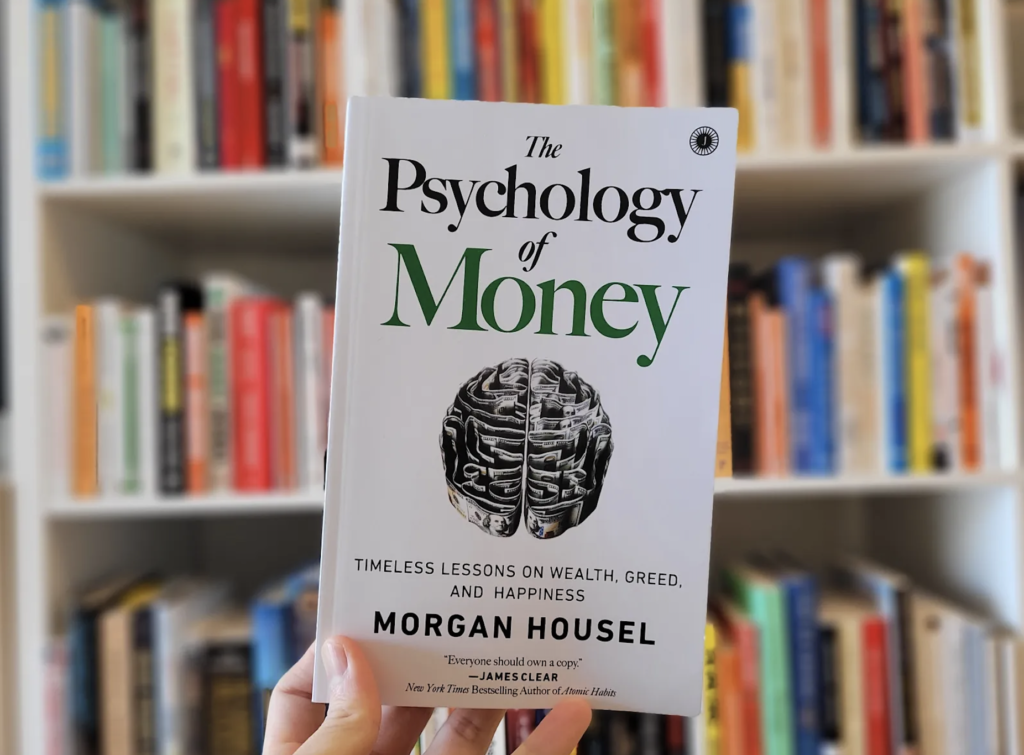
Book 5: "The Psychology of Money" by Morgan Housel
Core Lesson: Financial success is less about intelligence and more about behavior.
Morgan Housel's "The Psychology of Money" shifts the focus from market mechanics and financial formulas to the often-overlooked human element of money management. Through a series of short, engaging stories, Housel explores the psychological biases, emotional pitfalls, and irrational behaviors that profoundly impact financial decisions.
The book argues that while mathematical skills are important, understanding human psychology is often more critical for achieving financial well-being. Housel touches on concepts such as the power of compounding, the importance of saving, the role of luck and risk, and the definition of true wealth. He illustrates how individual experiences and beliefs shape financial choices, and why a rational approach is often undermined by emotion. This book is invaluable for any investor, as it equips them with a deeper understanding of themselves and others in the context of money, helping to cultivate healthier and more effective financial habits. While not exclusively about investing, it uses short stories to explore the behavioral aspects of money decisions, helping readers understand the psychological factors influencing financial choices (Bankrate).
Key Takeaways
| Book Title | Author | Primary Focus | Key Investor Takeaway |
|---|---|---|---|
| The Little Book of Common Sense Investing | John Bogle | Passive Investing, Index Funds, Low Costs | Minimize fees; match market returns with index funds for long-term growth. |
| The Only Investment Guide You'll Ever Need | Andrew Tobias | Personal Finance, Simple Investing, Budgeting | Start with sound financial habits before investing; keep it simple. |
| One Up On Wall Street | Peter Lynch | Individual Stock Picking, Everyday Observations | Trust your observations; invest in companies you understand. |
| The Essays of Warren Buffett: Lessons for Corporate America | Warren Buffett & L. Cunningham | Value Investing, Business Principles | Treat stocks as ownership in businesses; focus on long-term value. |
| The Psychology of Money | Morgan Housel | Behavioral Finance, Financial Psychology | Understand your biases; behavior dictates financial success more than intelligence. |
These books collectively underscore that successful investing isn't solely about finding the "best" stock, but rather building a robust financial plan, understanding your own behavior, and adhering to timeless principles.
Next Action
Begin by selecting one of these foundational books that most aligns with your current knowledge level and learning style. Commit to reading it thoroughly, taking notes, and reflecting on how its principles can be applied to your own financial situation. Consider starting a small, diversified investment portfolio as you learn, putting theory into practice with real, albeit modest, capital. The practical application of knowledge is where true understanding and confidence are forged.
Further Reading
- The Only Investment Guide You'll Ever Need (Andrew Tobias)
- The Little Book of Common Sense Investing: The Only Way to Guarantee Your Fair Share of Stock Market Returns (John Bogle)
- One Up On Wall Street: How To Use What You Already Know To Make Money In The Market (Peter Lynch)
- The Essays of Warren Buffett: Lessons for Corporate America (Warren Buffett and Lawrence Cunningham)
- The Psychology of Money: Timeless Lessons on Wealth, Greed and Happiness (Morgan Housel)
Disclaimer: This article is for informational purposes only and does not constitute financial advice.
Read Next
View all articlesEtsy Keyword Strategy: Master 13 Tags for Max Traffic
Unlock Etsy's search potential! Learn the 13-tag strategy to optimize keywords, attract buyers, and boost your shop's visibility.
Gumroad Sales: Anatomy of a High-Converting Digital Storefront
Turn Gumroad traffic into sales! Discover strategies for pricing, automation, and social proof to build a high-performing digital storefront.
Etsy SEO Masterclass: Rank Handmade Goods on Page One
Unlock Etsy SEO secrets! Learn how attributes, long-tail tags, and shipping strategies get your handmade items to page one.
Financial Stability for Single Parents: 12 Practical Strategies
Discover 12 actionable ways single parents can build financial stability, from budgeting and debt reduction to income boosting and long-term planning.