
The Daily Latte Habit: A Stealthy Drain on Your Future
Consider the ubiquitous $6 latte. A seemingly small indulgence, easily justified as a daily treat or necessary morning kickstart. But let's look beyond the immediate gratification. If you purchase just one $6 latte every weekday, five days a week, that amounts to $30 weekly. Over the course of a year, that's approximately $1,560 dedicated solely to coffee.
This isn't merely a matter of spending; it's a matter of opportunity cost. Every dollar spent on a daily latte is a dollar not invested. While $1,560 per year might not seem like a game-changer for your financial future on its own, its true impact comes into startling focus when you factor in the phenomenal power of compound interest. It's like opting for a single, fleeting snapshot instead of funding a full-length feature film of your financial well-being over decades.
Coffee Arbitrage: Reclaiming Your Daily Investment
The concept of "coffee arbitrage" isn't about trading coffee beans on a global market. Instead, it's about identifying and capitalizing on the significant price difference between a store-bought coffee beverage and an equally, if not superior, high-quality home-brewed alternative. By making a conscious decision to redirect the funds typically allocated to a daily "want"—the barista-made latte—towards a focused "investment," you fundamentally shift your financial trajectory.
Brewing a high-quality cup of coffee at home, even with premium beans, water, and specialized equipment, dramatically reduces the per-serving cost. A pound of specialty coffee beans, costing around $15-$20, can yield approximately 30-40 cups of coffee. This brings the cost per cup down to roughly $0.50 to $0.67 for the beans alone. Add in the cost of milk or other additions, and a high-quality home-brewed latte might cost you around $1.00 to $1.50 per serving. Compared to the $6 cafe latte, this represents an immediate saving of $4.50 to $5.00 per cup.
This simple change in behavior—shifting from external purchase to internal production—liberates a substantial sum that can be actively deployed for wealth building. It’s a deliberate rechanneling of a discretionary expense into a strategic investment.
The Power of Compound Interest: Your Coffee Fund's Growth Engine
The real magic happens when you consistently invest those daily savings. Compound interest, often called the eighth wonder of the world, allows your initial investment to grow, and then the earnings from that investment also start earning returns. It's like a snowball rolling down a hill, gathering more snow and momentum as it goes, becoming exponentially larger over time.
Let's quantify the potential impact. If you save $4.50 per day by brewing at home (a conservative estimate compared to a $6 latte) for five days a week, that’s $22.50 weekly, or $1,170 annually. Now, imagine consistently investing that $1,170 each year into a Roth IRA or traditional IRA, assuming an average annual return of 8% (a reasonable long-term historical average for diversified stock market investments, though actual returns vary).
- After 10 years: Your annual $1,170 contribution, compounded at 8%, could grow to approximately $18,400.
- After 20 years: That same consistent contribution could swell to nearly $59,000.
- After 30 years: Your coffee savings alone could fund a retirement nest egg worth well over $159,000.
This illustration demonstrates the profound impact of small, consistent financial adjustments, especially when harnessed by the compounding effect. The difference between spending $6 daily and saving $4.50 daily for 30 years isn't just $162,000; it's the potential for a significantly more secure retirement. The S&P 500, a broad measure of the U.S. stock market, has historically delivered an average annual return of about 10-12% over long periods, though past performance is not indicative of future results. Even with more conservative estimates, the growth is compelling.
Building Your At-Home Brew Station: Quality Without Compromise
The decision to brew at home doesn't mean sacrificing quality or taste. In fact, with the right equipment and a little practice, your home brew can surpass the quality of many commercial offerings. The initial investment in equipment is a small fraction of what you'd spend on daily lattes over a year, quickly paying for itself.
The Foundation: A Quality Burr Grinder
A burr grinder is perhaps the most critical component for exceptional home coffee. Unlike blade grinders that chop beans inconsistently, a burr grinder crushes them evenly, producing a uniform particle size. This uniformity is paramount because it allows for an even extraction of flavors during brewing, leading to a more balanced and delicious cup. Investing in a quality burr grinder ensures you extract the full potential from your chosen beans.
 View TimeMore Chestnut C2S Manual Coffee Grinder on Amazon
Brewing Excellence: French Presses and Pour-Over Kits
Once your beans are perfectly ground, the brewing method dictates the final flavor profile.
- French Presses: For those who appreciate a rich, full-bodied cup with a velvety mouthfeel, a French press is an excellent choice. It works by steeping coarse grounds in hot water for several minutes before pressing them down. This method allows all the coffee oils and fine sediment to remain in the brew, delivering a robust and intense flavor.
 Recommended: MuellerLiving French Pres Coffee Maker 34oz
- Pour-Over Kits: If clarity, subtlety, and the nuanced flavors of specialty beans are your preference, a pour-over kit is ideal. This method involves slowly pouring hot water over coffee grounds in a cone-shaped filter. The controlled flow rate and interaction with the grounds result in a clean, bright cup that highlights the individual characteristics of the coffee bean. Both methods are relatively inexpensive to acquire and simple to master with a bit of practice.
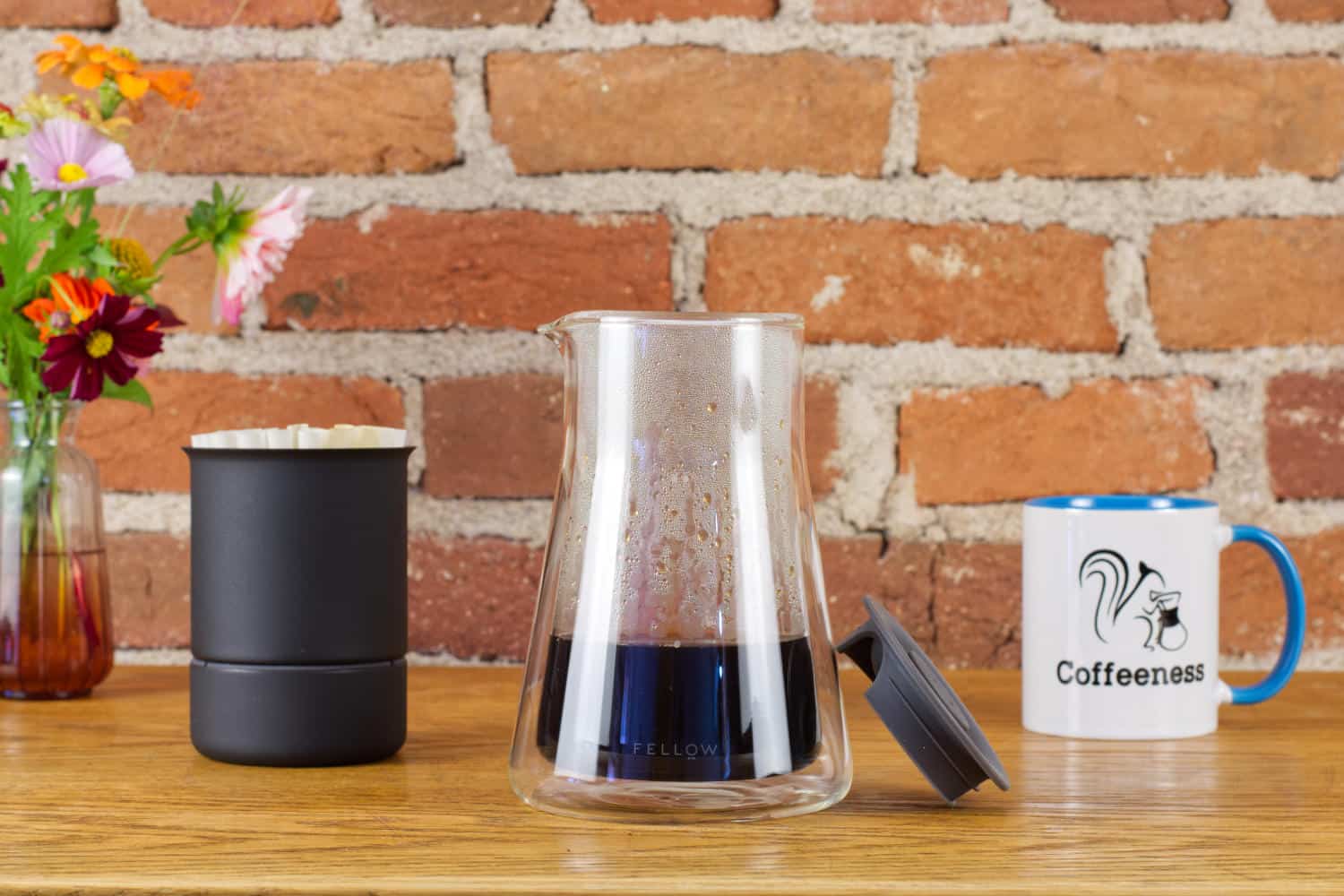 Recommeneded: Fellow Stagg Pour-Over Dripper & Double Wall Glass Carafe Kit 20 oz
The Finishing Touch: Milk Frothers
For lovers of lattes and cappuccinos, a milk frother is an essential addition. These devices range from simple handheld wands to automatic machines that heat and froth milk to perfection. With a frother, you can replicate your favorite cafe drinks at a fraction of the cost, complete with creamy, luxurious foam. This addition allows you to enjoy the full barista experience without the daily expense.
The total cost for a quality burr grinder, French press or pour-over kit, and a basic milk frother can range from $150 to $300. Compared to the annual $1,560 spent on daily lattes, this investment typically pays for itself within two to four months, after which every cup represents pure savings and compounding potential.
 Recommended: Maestri House Rechargeable Milk Frother with Stand
Automating Your Savings: From Habit to Investment
The transition from spending on wants to investing for the future is most effective when it's automated. Once you've established your home brewing routine, the next critical step is to ensure that the money you're saving doesn't just disappear into other discretionary spending.
Set up an automatic transfer from your checking account to your IRA (Individual Retirement Account) on a weekly, bi-weekly, or monthly basis. You can align this transfer with your payroll schedule or simply deduct the approximate amount you'd save from daily lattes ($1,170 annually translates to about $97.50 per month). This transforms the behavioral change of brewing coffee at home into a concrete, consistent investment strategy. By automating this process, you eliminate the need for willpower or remembering to transfer funds, ensuring that your savings consistently work for you. This simple, habitual change becomes a powerful engine for long-term wealth accumulation.
Beyond Coffee: Applying Arbitrage to Other Daily Expenses
The principle of coffee arbitrage can be extended far beyond your morning brew. Consider other routine expenses that can be significantly reduced or redirected with a slight shift in habits and behavior:
- Packed Lunches: Bringing a homemade lunch instead of buying one daily.
- Subscription Services: Reviewing and potentially canceling unused streaming, gym, or software subscriptions.
- Dining Out: Reducing the frequency of restaurant meals in favor of home-cooked alternatives.
- Entertainment: Opting for free or low-cost activities (parks, libraries, home movie nights) over more expensive outings.
Each small adjustment, when consistently applied and the savings redirected, contributes to a larger financial goal. It’s about cultivating a mindset where every dollar spent is a conscious choice, and every dollar saved is an opportunity to invest in your future. These focused changes don't require drastic lifestyle overhauls; rather, they involve simple, intentional shifts that, over time, can profoundly impact your financial independence.
Next Action
Calculate your current daily coffee spending over a year. Then, research and price out a quality burr grinder, your preferred brewing method (French press or pour-over), and a milk frother. Subtract the cost of this home setup from your annual coffee spending to determine your immediate yearly savings. Finally, set up an automatic monthly transfer of that calculated savings amount from your checking account directly into a Roth or Traditional IRA to begin harnessing the power of compound interest for your retirement.
Further Reading
Read Next
View all articlesGumroad Sales: Anatomy of a High-Converting Digital Storefront
Turn Gumroad traffic into sales! Discover strategies for pricing, automation, and social proof to build a high-performing digital storefront.
Land First $500 Freelance Client: Your Step-by-Step Guide
Discover practical strategies to land your first $500 freelance client, even without prior experience. Build a portfolio, find clients, and secure testimonials.
Etsy Keyword Strategy: Master 13 Tags for Max Traffic
Unlock Etsy's search potential! Learn the 13-tag strategy to optimize keywords, attract buyers, and boost your shop's visibility.
Financial Stability for Single Parents: 12 Practical Strategies
Discover 12 actionable ways single parents can build financial stability, from budgeting and debt reduction to income boosting and long-term planning.